By Athenas Cati Malavé | @athenasglauks
Abstract
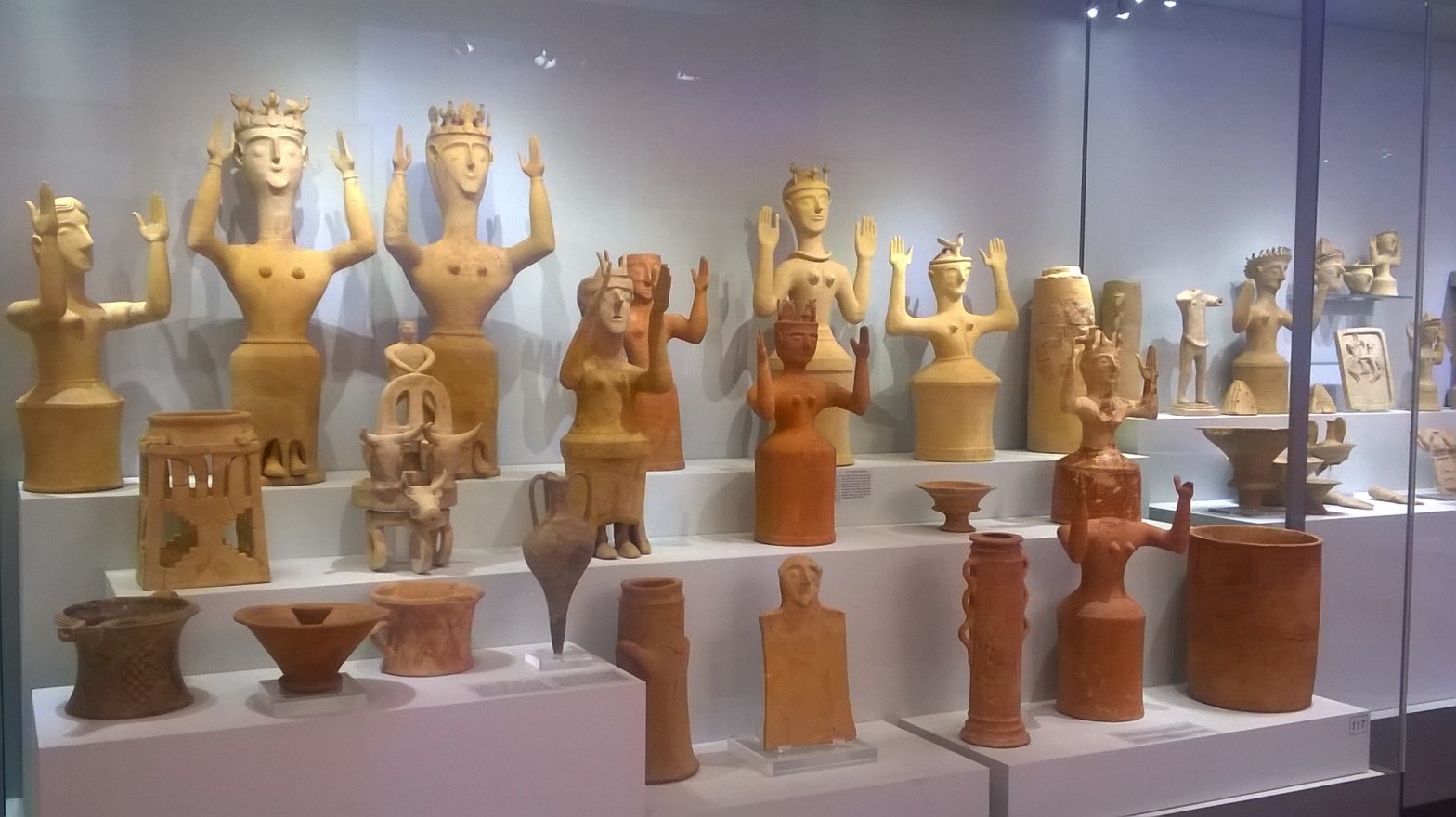
With the name of Minoan was known a pre-Hellenic civilization that arose, developed and eclipsed in Crete an island located in the waters of the Mediterranean Aegean between 3000 and 1100 B. C. E. Its society was characterized by a naturalistic, peaceful and sensitive spirit, traits that it would reflect in its religion, as well as in all aspects of its life. One of its most relevant religious practices would focus on the cult of the tree, a symbol of fertility. These rituals, which implicitly carried the ideas of life, death, Beyond, and regeneration, were possibly celebrated annually and would be testified by varied iconographic documentation of which the adoration of the tree and certain entheogenic elements (plants that after their ingestion provide a divine experience) have been interpreted, as well as the feminine and masculine divinities that embodied a hierogamy. These would have as center, the renewal of the vital cycle, through the combination of an ecstatic behavior and the execution of sacred dances.
Once the panoramic view had been outlined and following the guidelines of the history of religions, a diachronic and transdisciplinary study of the mythical-symbolic and ethnobotanical aspects observed in the so-called cult of the tree practiced by the Minoans during the Bronze Age was proposed; to analyze the documentation and the academic budgets, a non-religiocentric dating was used through the use of the abbreviation B. C. E. (Before Common Era), as well as the method of iconographic exegesis suggested by E. Panofsky. The results allowed an approximate understanding of the phenomenon of which the importance of the socio-religious use that Minoan culture conferred on certain plants within the ritual environment is valued. In this sense, a rapprochement and understanding of the knowledge, behaviors and religious beliefs of this civilization in Ancient was achieved.
® Athenasglauks | Athenas Cati | Athenasojosdelechuza 2020
Sources:
- This abstract was originally published in Academia.edu and was presented by me (Z. Athenas Cati Malavé: lead author) during the XI Conference on Humanistic and Educational Research, Faculty of Humanities and Education (FHE, UCV | 2015). Others authors: Javier Rodríguez.
- The Heraklion Archaeological Museum
 Athenasglauks